Physical Address
304 North Cardinal St.
Dorchester Center, MA 02124
Physical Address
304 North Cardinal St.
Dorchester Center, MA 02124

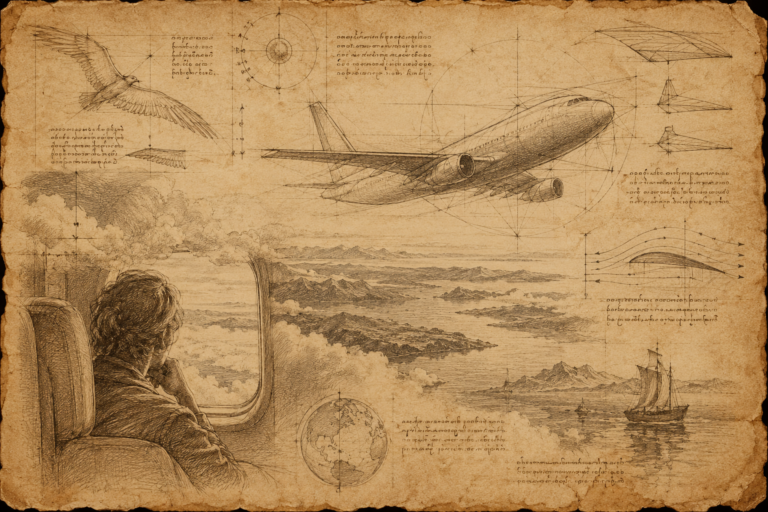
What happens when the extraordinary becomes ordinary? During a flight to Lisbon, I found myself reflecting upon the marvels we have ceased to notice, and how familiarity shapes our perception of life. An exploration of attention, wonder, and gratitude—not merely as a pleasant emotion, but as a capacity through which we may participate more fully in life.

The words I hear I have heard before—the laughs and loves, the tears and cries. Somewhere beyond them, the bells keep ringing, calling the traveller home. Yet I do not know where home may be, whether I will be invited in when I arrive, or if the call was a call at all.

What do you want to do? A simple question can reveal something surprisingly difficult: whether we know ourselves well enough to distinguish what is expected of us from what genuinely calls us forth, and whether we possess the Will to live accordingly.
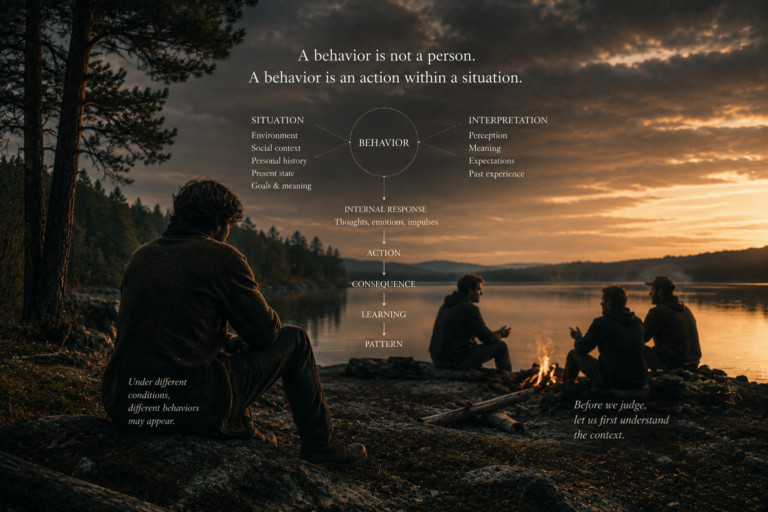
We are quick to turn an action into a characteristic: a person acts restlessly, and we call them restless. Yet behavior does not occur in isolation. It emerges within a particular situation, shaped by history, expectation, present state, and interpretation. Perhaps before deciding who a person is, we ought first to ask what circumstances brought the behavior forth.

We each inhabit a reality that no other person can fully enter. Yet how often do we expect others to know our burdens, our thoughts, and our needs without ever speaking them? An ordinary morning at a coffee shop became an unexpected lesson in pride, compassion, and the mystery of another person's inner world.

Every artist knows the frustration of seeing an idea diminish as it reaches the page. Perhaps people are no different. Before judging another's words or actions, we might first ask a quieter question: What are they trying to express?

Hearing that a close friend had found the courage to court the woman he loved led me to reflect on something far greater than romance. To choose another, and to be chosen in return, may be among the deepest responsibilities—and greatest miracles—of human existence.

A small bird flew into my home by mistake. What began as an ordinary encounter soon revealed something far less ordinary: how quickly I judged what I did not expect, and how easily compassion disappears when beauty gives way to decay.

We often assume that our strongest impulses reveal what we truly need. Yet, like the warm shower that cools the body more effectively than a cold one, our deepest needs are sometimes hidden beneath the very reactions that seem designed to satisfy them. What if maturity begins by learning to distinguish the two?

Imagining the certainty of death led me to an unexpected realization. It was not death itself that brought calm, but the disappearance of everything that had distracted me from living.