Physical Address
304 North Cardinal St.
Dorchester Center, MA 02124
Physical Address
304 North Cardinal St.
Dorchester Center, MA 02124
Watching a family of sparrows outside my window became an invitation to imagine a world I will never truly know. Perhaps visualization is not merely preparation, but one of our deepest paths toward empathy.
I’m staring out the window while listening to the coffee maker finishing its work in the kitchen. The last drops always sound almost violent as the trapped air forces itself through the tubes. At the very least, it lets you know the coffee is almost ready.
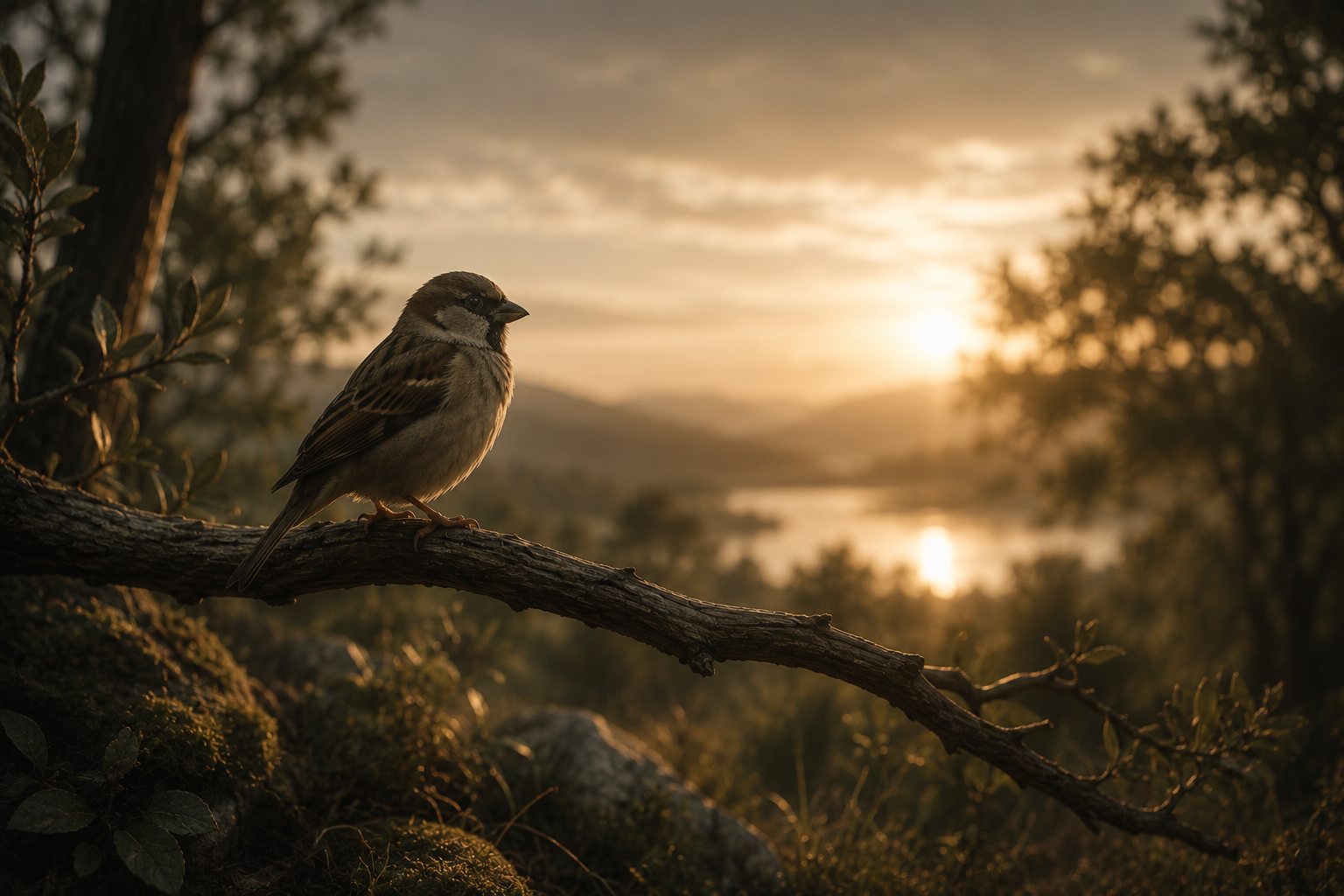
Outside my window, a family of sparrows is playing. There must be nearly ten siblings now, and they seem to grow every day. I placed a bird feeder outside my window some time ago, partly to give them something to eat, but equally for the pleasure of watching them.
After they have eaten, each bird seems to take one final seed before hopping to the edge of the roof. Then they simply step off.
A second later, they are gliding effortlessly through the air.
I find myself standing there in quiet amazement.
What does a bird experience?
To step from the edge of a roof and be held aloft by nothing but the resistance of air. What does that feel like? I imagine it is something like going down a slide—only without the slide.
How do you move through a world where movement is not confined to two dimensions, but three? To notice the top of a tree and, five seconds later, find yourself resting in its branches.
I spend considerably longer than I could reasonably justify imagining myself as a small sparrow.
To float.
To fly.
To meet birds ten times your own size.
To look upon human beings as giants.
How do you navigate such a world? Are you afraid? Is flight so ordinary that you scarcely think about it? Is every moment a marvel, or is every moment a struggle for survival?
What do you sense?
What do you see?
What do you feel?
From rooftops to treetops.
We often speak of a bird’s flight as a symbol of freedom. But how do you experience freedom when air and earth belong equally to your world? What anchors you? Or is the possibility of being almost anywhere so ordinary that you never think about it at all?
What does a cow think?
Who knows.
The practice of visualization might be dismissed by some as little more than daydreaming. Yet this often neglected faculty of the mind contains hidden treasures. The question is not whether we imagine, but how we cultivate and direct that ability.
Thinking about the flight of a sparrow may seem trivial, yet it allows the mind to contemplate an experience it has never itself possessed. Perhaps there is a reason why athletes spend hours visualizing their performances before they compete. Perhaps visualization is not merely preparation, but one way of learning to inhabit another perspective.
Many of the things I have set out to accomplish first had to become an inner experience.
If something that has never existed is to be brought into being, it must first take shape within the imagination. The greater the aim, the more carefully that inner vision must be cultivated. More details emerge. More time is required. What first appears as a simple act of will gradually becomes something living.
But perhaps this practice need not always serve achievement.
And that this act, this practice, for the soul sake of empathy for a sparrow is simply enough?